Essay
Beyond the Business Case: What Is Venture Capital For?
The business case for inclusion got venture capital this far. Meghan Stevenson-Krausz, CEO of Diversity VC, on why a more fundamental question is now overdue: who are these returns ultimately for?
Over the past few years, inclusion has moved from the margins to a more established part of how the venture ecosystem approaches sustainability. An increasing number of firms now have some form of strategy, framework, or set of commitments in place, and the business case is widely understood.
And yet, when you look at how that activity is evolving, a more nuanced picture begins to emerge. Atomico’s own data in this report points to a subtle but important shift: while other areas of sustainability continue to advance, progress on inclusion appears to have levelled off. The instinctive response is to restate the business case – to point, once again, to the evidence that more diverse teams make better decisions, see broader opportunities, and ultimately drive stronger returns. But it is worth asking whether that is the right starting point.
Much of the conversation around inclusion in venture has been shaped by a US-centric lens: one that emphasises individualism, market logic, and the need to justify action through financial return. That framing played an important role in building early momentum, and rightly so – making the connection between inclusion and performance was critical to moving the conversation into the mainstream.
But making the case is only the first step. The more difficult challenge is embedding inclusion into how firms actually operate: how decisions are made, how capital is allocated, and how success is defined. Where that shift has not fully taken place, progress can stall — not because the argument is unconvincing, but because it has not yet translated into durable practice.
At the same time, the UK and Europe are in a position to take a different path. These are ecosystems where public and private capital are more closely intertwined, and where the idea of designing systems for the collective – not just the individual – is more deeply embedded. This matters when we consider who venture capital is ultimately accountable to. In the UK, institutions such as the British Business Bank play a central role in funding the ecosystem, deploying taxpayer capital into venture. With ongoing pension reforms, an even greater share of venture capital will be underpinned by the savings of millions of individuals across the country.
This shifts the lens. Venture capital is not operating in a vacuum. It is increasingly powered by capital that represents a broad cross-section of society and, in turn, has a responsibility to create outcomes that reflect that.
Which brings us back to how capital is allocated. Venture capital is built on a simple premise: investing in outliers to generate outsized returns. But that raises an important question. If the majority of capital continues to flow to founders who look remarkably similar – in background, education, and networks – are we truly identifying outliers, or are we repeatedly funding a familiar profile?
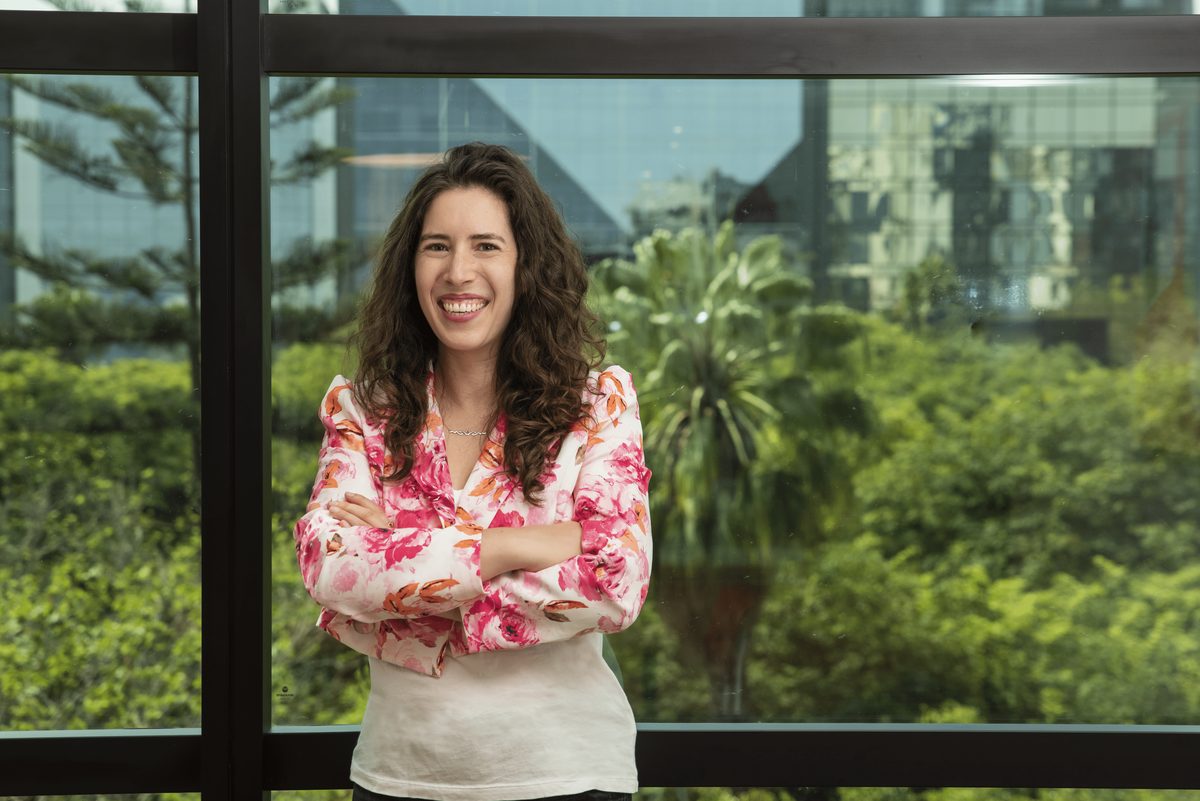
Which brings us back to how capital is allocated. Venture capital is built on a simple premise: investing in outliers to generate outsized returns. But that raises an important question. If the majority of capital continues to flow to founders who look remarkably similar – in background, education, and networks – are we truly identifying outliers, or are we repeatedly funding a familiar profile?
Pattern recognition is a powerful tool in investing, but when left unchecked, it can become pattern replication. The risk is not only one of fairness, but of missed opportunity. If we define “exceptional” too narrowly, we limit the very set of founders capable of delivering the kind of returns venture seeks. At the same time, when the same profiles are consistently funded, the benefits of those investments – financial and societal – tend to accrue in similarly narrow ways. There is, increasingly, a disconnect between who is funding the system, who is being funded by it, and who ultimately benefits from the outcomes it creates.
This is not an argument for compromising returns. Venture capital exists to generate outsized outcomes, and that mandate is not in question. However, it is worth asking a more fundamental one: what do those returns ultimately need to support? As pension capital becomes an increasingly important driver of the ecosystem, the objective is not simply to maximise financial gain in the abstract, but to generate long-term value for people’s futures.
If the businesses those returns are built on contribute to a world that is increasingly difficult to live in – whether through environmental strain or deepening inequality – then the value of those returns becomes less certain. In that context, returns cannot be evaluated in isolation from the systems they help shape. They need to be understood more holistically: not just in terms of financial performance, but in terms of the durability and inclusiveness of the outcomes they create.
The question, then, is no longer whether diversity improves outcomes. It is whether venture capital is willing to take a more complete view of the outcomes it is responsible for, and to align its definition of success with the people – and the future – those returns are ultimately meant to serve.